Mattress Materials and Buying Guides
Choosing a Naturepedic Latex Bed: Feel, Support, and Materials
Latex is a mattress material with a distinctive spring to it: it gives under pressure, then rebounds quickly when pressure lifts. That lively response is different from the slower, closer-hugging sensation associated with many memory foams. For shoppers considering a Naturepedic latex bed, the most useful starting points are the feel you prefer, the support your body needs, and the details of how a particular mattress is built.
Published October 28, 2026
Begin with the sensation, not the label
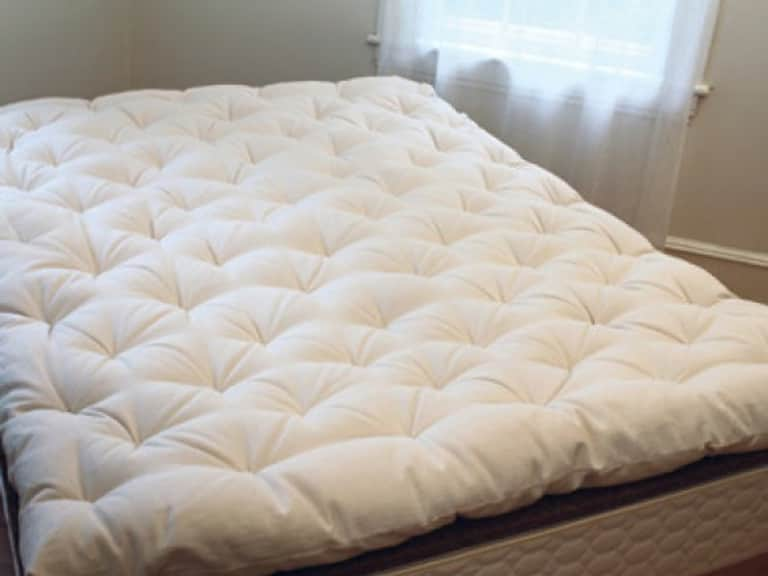
“Latex mattress” describes a material, not one universal sleeping experience. A latex bed may feel buoyant, gently contouring, resilient, firm, or notably cushioned, depending on its construction. The latex itself matters, but so do its thickness, density, firmness, position within the mattress, and the layers surrounding it.
Imagine pressing a hand into a springy surface. A responsive material compresses beneath the hand and rises back promptly when the hand moves away. On a bed, that quality can make it easier to shift position without feeling as though the surface is slowly closing around the body. Some sleepers describe the sensation as sleeping “on” the mattress rather than sinking deeply “into” it, though the exact impression varies with the bed’s design and the sleeper’s build.
That responsiveness is one reason latex attracts people who move frequently during the night or prefer a surface that does not feel deeply enveloping. It does not automatically mean that every latex bed is firm, nor does it guarantee that every sleeper will find it comfortable. “Natural latex” and “organic latex” also do not, by themselves, describe a mattress’s complete feel or prove that every component has the same material origin. A useful comparison looks beyond the headline term to the specification of the whole bed.
For Naturepedic latex options in particular, consult the current product information for each model. Names, available configurations, layer arrangements, and specifications can differ. Rather than assume that one description applies to every mattress in a brand’s range, check the exact model and size you are considering.
What latex does beneath the body
A mattress has to perform two related but different tasks. It needs to cushion the body at the surface, and it needs to provide support beneath that cushioning. Latex can contribute to both, but the result depends on the way the material is used.
At the surface, a comfort layer can compress around prominent areas such as the shoulders and hips. This cushioning may reduce the sense of pressure against the bed, particularly for side sleepers, whose shoulders and hips typically bear more contact. Beneath that layer, firmer material can help resist excessive sinking. A well-matched combination aims to let the body settle enough for comfort while maintaining a supported, natural-feeling posture.
Latex’s quick rebound can make its pressure relief feel different from that of memory foam. Memory foam often responds more gradually and may create a close, cradling sensation. Latex generally recovers more quickly, which can produce a more buoyant impression. Neither description is a verdict on quality: comfort is personal, and the right choice depends on how a sleeper experiences pressure, movement, and heat.
Layer thickness changes the character of a bed. A thicker comfort layer may create a more noticeable cushioning effect, while a thinner layer over a firmer support core may feel more direct. Multiple layers can be arranged to create different balances of softness and resistance. A mattress may also combine latex with other materials, so the label alone cannot reveal how much of the overall feel comes from latex.
Firmness is a starting point, not a complete answer
Firmness is often presented as a simple scale, but it is not a universal measurement shared perfectly across brands. One manufacturer’s medium may feel different from another’s. A person’s body weight, shape, preferred sleeping position, and sensitivity to pressure all influence how a given surface feels.
Heavier sleepers may compress a mattress more deeply than lighter sleepers, making the same model feel softer to them. A lighter sleeper may not sink far enough to experience the cushioning intended by a softer comfort layer. These are broad tendencies, not rules: individual proportions and preferences matter, and a mattress that works well for one person may not suit another with a similar body weight.
Firmness should also be considered alongside support. A bed can feel firm at first touch yet fail to keep a sleeper comfortably aligned. Conversely, a mattress that feels plush at the surface may still have enough underlying resistance to support the body. Pay attention to both the immediate sensation and how the surface behaves once you have been lying in your usual position for a while.
- Side sleepers: Consider whether the shoulder and hip can settle without uncomfortable pressure, while the waist and trunk remain supported.
- Back sleepers: Notice whether the surface cushions the lower back and other contact points without allowing the pelvis to sink excessively.
- Stomach sleepers: Many prefer a firmer, less deeply yielding feel, though personal comfort and body proportions still matter.
- Combination sleepers: Consider how easily the surface allows turning and whether it remains comfortable in more than one position.
These observations are useful for narrowing choices, but they are not medical advice or a diagnosis. Persistent pain or significant sleep problems deserve discussion with a qualified health professional. A mattress is one part of a sleep environment, not a guaranteed treatment for a health condition.
All-latex and layered construction
An all-latex mattress uses latex as its principal cushioning and support material, although it will also include a cover and may contain other components. A layered mattress places materials in distinct sections, which can combine a softer surface with a more supportive base. Both approaches can produce a responsive bed; their differences lie in the details of the build and in the way a sleeper experiences the transitions between layers.
With an all-latex design, ask how many latex layers are present, where they are placed, and whether the layers differ in firmness. In a layered design that combines latex with other materials, identify which layer is nearest the sleeper and what the underlying support system contains. These questions help turn a broad product description into a clearer picture of what the mattress may feel like.
Layer order matters because the material closest to the body strongly influences initial cushioning, while the deeper construction affects how the bed resists compression. A comfortable surface can still feel unstable if the overall system does not suit the sleeper. Likewise, a supportive base does not guarantee that the top layers relieve pressure to the degree someone wants.
Check the listed mattress height as well. The profile can affect the depth of fitted sheets, the height of the sleep surface, and how the bed works with a frame. A thick mattress is not necessarily more supportive, and a thinner one is not necessarily less durable. Construction and materials provide more useful clues than height alone.
Natural and organic latex: read the material details
Shoppers often encounter terms such as natural latex, organic latex, and blended latex. These labels can describe different aspects of a material’s sourcing or manufacture, but they should not be treated as interchangeable shorthand for every component in a finished bed. A mattress can contain several layers, a cover, stitching, and other materials. To understand what is being represented, look for a model-specific materials list and any applicable certification information.
Certification names and claims are most helpful when their scope is clear. Does a certification apply to a specific raw material, a component, or the finished product? Which organization issued it, and what does it assess? A transparent product description should let buyers distinguish the claim from the evidence behind it. If the wording is unclear, ask the manufacturer or retailer for documentation rather than assuming the entire mattress is certified because one ingredient is.
Also review the cover and the other layers, not only the latex. A bed’s feel, care needs, and material profile are shaped by its complete construction. For consumers seeking a simpler bill of materials, written details may be more valuable than broad phrases such as “eco-friendly” or “chemical-free,” which can mean different things in different contexts.
For Canadian shoppers, product availability, shipping arrangements, warranty terms, and return procedures may vary by retailer and location. Confirm the precise terms that apply to the purchase in Canada, including who handles returns and whether pickup or transport charges are involved. Policies can change; read the current written terms before ordering.
Temperature, motion, and everyday comfort
Latex’s responsiveness is often part of its appeal, but comfort is not determined by one material property. A sleeper’s temperature depends on the person, bedding, room conditions, clothing, and the complete mattress construction. Latex may feel less enveloping than some memory foams, yet that does not mean every latex bed will sleep cool for every person.
Consider the cover, the depth of the comfort layers, and any other materials used in the bed. Sheets and mattress protectors can also change the feel of the surface. A protector that is waterproof, for example, may add a layer between the sleeper and the mattress; its fabric and construction can affect how the bed feels. If you already own a protector or plan to use one, include it in your comfort assessment.
For couples, motion is another practical consideration. A responsive surface can make movement feel easy, which some sleepers appreciate when changing positions. The same lively rebound may be more noticeable to a partner than the slower response of another material. Mattress size, the bed frame, and each sleeper’s movement all contribute to the experience. If possible, test the surface with two people rather than relying only on a single-person impression.
Edge support is also worth checking, particularly for people who sit on the side of the bed or use its full sleeping width. Latex layers, mattress construction, and the underlying foundation can influence how the perimeter behaves. Ask for details about the edge design, then test it directly where a trial is available.
A practical checklist before choosing
Comparing beds becomes easier when the questions remain consistent from one model to the next. Keep notes on the specific product name and the date you checked its specifications, since product details and policies can change.
- Identify the exact model. Do not assume that features described for one Naturepedic mattress apply to another.
- Read the full construction. Note the materials, layer order, thicknesses, and whether the mattress is all-latex or combines materials.
- Match feel to position. Consider where your body contacts the mattress most and whether you prefer a buoyant or deeply contouring surface.
- Check the firmness description. Treat it as a guide rather than a standardized measurement, and look for model-specific explanations.
- Review certifications carefully. Confirm what material or product a certification covers and consult the supporting documentation.
- Test movement and pressure relief. If an in-person trial is possible, lie in your usual positions long enough to notice pressure, ease of turning, and support.
- Confirm foundation requirements. Check what type of frame or base is permitted and whether it affects warranty coverage.
- Read trial, return, and warranty terms. Confirm deadlines, exclusions, fees, and the process for a Canadian delivery address.
- Review care instructions. Ask whether the mattress can be rotated, whether its cover is removable, and how spills should be handled.
Keep the decision focused on the mattress as a complete system. A compelling material story cannot substitute for a comfortable fit, and a firmness label cannot predict precisely how a bed will feel in your home. The construction details, trial conditions, and your own response all belong in the decision.
How to judge a trial at home
A brief showroom visit can reveal a mattress’s first impression, but a home trial offers a chance to notice how it feels across ordinary nights. Use the bed in your usual sleeping positions and with the bedding you expect to use. Record simple observations: pressure at the shoulders or hips, ease of turning, temperature, and whether you feel adequately supported when waking.
Give yourself time to distinguish a new surface from a familiar one, while respecting the trial period’s exact terms. There is no universal number of nights that guarantees a fair assessment. Follow the retailer’s instructions, note the deadline, and contact the seller promptly if the mattress seems unsuitable. Some trial policies include conditions, charges, or exclusions, so do not assume that “trial” means an unrestricted return.
If two people share the bed, each should keep separate notes. Differences in body size, sleep position, and sensitivity to movement can lead to different impressions of the same mattress. The goal is not to find a single adjective that describes the bed, but to determine whether both sleepers can rest comfortably and whether any trade-offs are acceptable.
The best choice is the one that fits the sleeper
Latex’s defining character is its resilient response: it compresses and rebounds without the pronounced slow sink associated with many memory foams. That quality can make a bed feel lively and easy to move on, while carefully arranged layers can add cushioning and support. But no material name can decide comfort on its own.
When considering a Naturepedic latex bed, compare the exact model’s firmness, layers, cover, material disclosures, care guidance, and purchase terms. Think through your preferred sleep position and the sensations you want from a mattress. Then use a trial or an in-person assessment, when available, to test those expectations against real experience.
The most dependable choice is not necessarily the softest, firmest, or most elaborate one. It is the bed whose construction makes sense for the sleeper, whose materials are clearly described, and whose terms are understood before purchase. Like a landscape viewed from more than one trail, a mattress reveals its character through several observations: the first touch, the support beneath the body, and the comfort that remains after the lights go out.